
Treatment overview
Thin ceramic restorations for refined front-tooth aesthetics
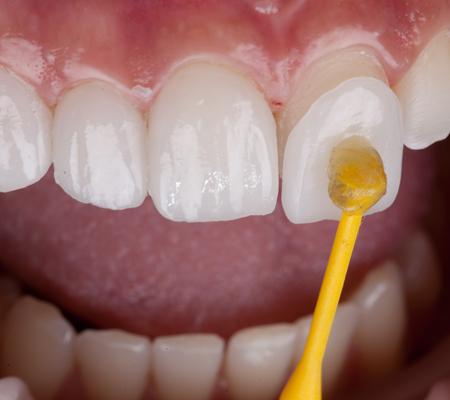
Laminate veneers, sometimes called porcelain veneers, are bonded to the front surfaces of teeth. They can be used to alter colour, shape, length and visible spacing when the teeth and bite are suitable. Their thin ceramic structure can provide natural light transmission and stable colour.
The amount of tooth preparation varies. In some cases only minimal enamel reduction is required; in others more preparation may be needed to avoid an over-contoured result. Careful planning is essential because veneers are not appropriate for every bite, heavily weakened tooth or severe alignment problem.
Assessment
Aesthetic concerns that veneers may address
Discolouration that does not respond predictably to whitening
Small gaps between selected front teeth
Chipped, worn or irregular incisal edges
Uneven tooth shapes or proportions
Mild alignment discrepancies where orthodontics is not required
A desire for a coordinated change in front-tooth colour and form
Why patients consider it
Key benefits
Quality dental ceramics can reproduce the light-reflecting properties of enamel.
When the case is suitable, preparation can often be limited mainly to enamel.
Ceramic surfaces resist many common dietary stains better than direct resin.
Shape and proportions can be designed in advance with photographs, scans and mock-ups.
Step by step
Your treatment journey
Aesthetic consultation
Facial, smile, tooth and gum relationships are analysed and the goals are discussed.
Digital or physical preview
A proposed design may be tested with a mock-up before final preparation.
Tooth preparation and scan
Minimal preparation is performed where required and an accurate scan or impression is taken.
Ceramic fabrication
The laboratory produces custom veneers based on shade, texture and shape instructions.
Try-in and adhesive bonding
Fit and appearance are checked before the veneers are bonded and the bite is refined.
Long-term success
Care and aftercare
Veneers require the same high standard of gum health and cleaning as natural teeth.
- Brush and clean between veneered teeth every day
- Avoid using front teeth to bite hard objects or open packaging
- Wear a protective night guard if you clench or grind
- Attend regular reviews so margins, gums and bite can be monitored
Common questions
Laminate Veneers FAQ
Do veneers always require tooth shaving?
Preparation depends on tooth position, enamel thickness and the planned final contour. Some cases need minimal preparation, while no-prep treatment is only suitable in selected situations.
How long do ceramic veneers last?
Their lifespan varies with bite forces, material, oral hygiene, gum health and habits such as grinding. They are durable restorations but are not permanent for life.
Can veneers fix very crooked teeth?
Veneers can camouflage minor discrepancies, but significant crowding or bite problems are often better managed with orthodontic treatment first.